

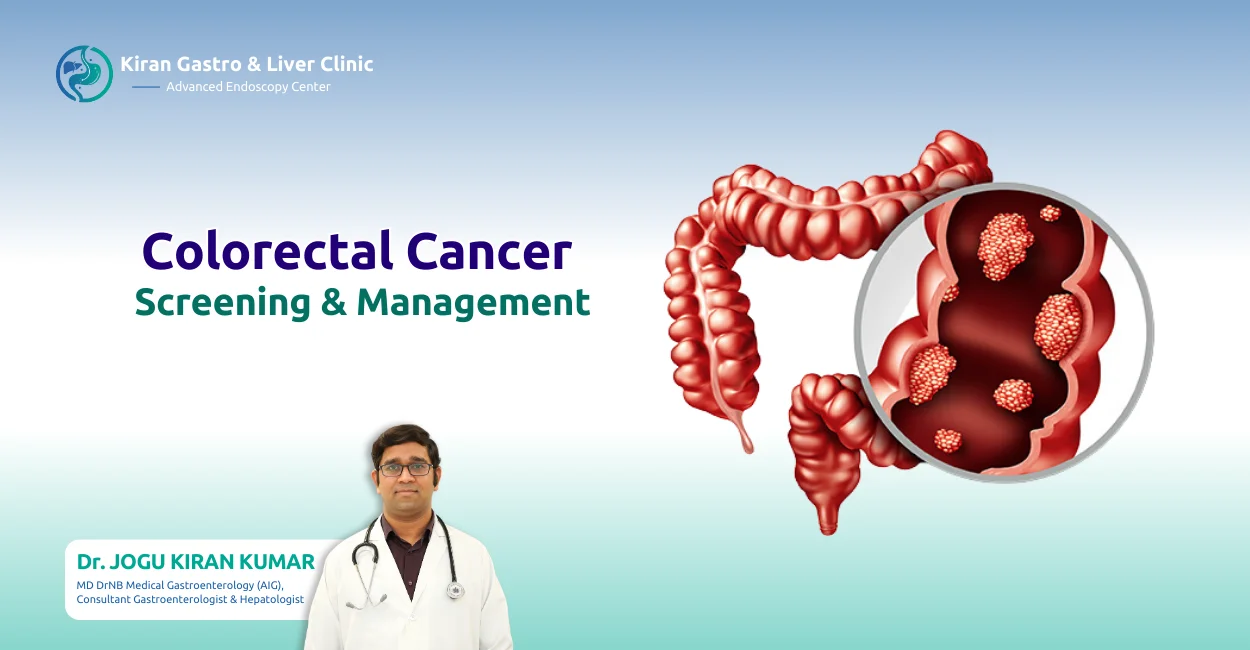
At Kiran Gastro & Liver Clinic, Advanced Endoscopy Center, Dr. Kiran Kumar Jogu, a highly experienced gastroenterologist & hepatologist in Hyderabad, provides comprehensive services for the screening, diagnosis, and management of colorectal cancer. Colorectal cancer, which affects the colon or rectum, is one of the most common cancers worldwide. Early detection is crucial for effective treatment and improving outcomes.
Colorectal cancer is cancer that begins in the colon or rectum, parts of the digestive system. It usually starts as polyps (small growths) on the inner lining of the colon or rectum, which can eventually develop into cancer over time. If not detected and treated early, colorectal cancer can spread to other parts of the body.
Certain factors increase the likelihood of developing colorectal cancer, including:
Age: Risk increases after the age of 50.
Family History: A family history of colorectal cancer or polyps can increase risk.
Diet:A diet high in red or processed meats, and low in fruits, vegetables, and fiber, can contribute to the risk.
Lifestyle Factors:Lack of physical activity, smoking, and heavy alcohol use can raise the risk of colorectal cancer.
Chronic Conditions: Conditions like ulcerative colitis and Crohn’s disease can increase the risk of colorectal cancer.
Colorectal cancer can often develop without noticeable symptoms in the early stages. When symptoms occur, they may include:
Rectal bleeding or blood in stools
Unexplained weight loss
Abdominal discomfort or pain
Changes in bowel habits (diarrhea or constipation)
Persistent fatigue
Feeling that the bowel is not empty after a bowel movement
If you experience any of these symptoms, it’s essential to seek medical advice for further evaluation
Early detection is key to preventing the progression of colorectal cancer. Screening is recommended for individuals aged 50 and above, or earlier if there is a family history of colorectal cancer or other risk factor.
Colonoscopy: The most common and effective method for screening. A flexible tube is used to examine the colon and rectum for abnormal growths or polyps. If any polyps are found, they can be removed during the procedure.
Fecal Occult Blood Test (FOBT):A non-invasive test that checks for hidden blood in the stool, which may indicate the presence of polyps or cancer.
Flexible Sigmoidoscopy:Similar to colonoscopy, but this procedure examines only the rectum and lower part of the colon.
CT Colonography (Virtual Colonoscopy): A CT scan that provides detailed images of the colon to detect abnormalities.
Stool DNA Test: A test that analyzes stool samples for genetic changes associated with colorectal cancer.
The treatment approach for colorectal cancer depends on several factors, including the stage of cancer, location, and the patient’s overall health. The primary treatment options are:
Surgery is the most common treatment for early-stage colorectal cancer. It involves the removal of the tumor and surrounding tissue, and in some cases, part of the colon or rectum may need to be removed. For more advanced cases, a colostomy (an opening in the abdomen for waste removal) may be necessary.
Chemotherapy is often used after surgery to destroy any remaining cancer cells and to reduce the risk of recurrence. It can also be used before surgery to shrink large tumors.
Radiation therapy uses high-energy rays to target cancer cells. It is often used in combination with chemotherapy to treat rectal cancer, especially if surgery alone is not sufficient.
Targeted therapies are drugs that target specific molecules involved in the growth of cancer cells. These treatments can be used in advanced or metastatic cases to slow the growth of the tumor.
Immunotherapy boosts the body's immune system to recognize and attack cancer cells. It may be used for certain types of colorectal cancer, especially if the cancer has spread.
For patients with advanced-stage cancer, palliative care aims to improve quality of life by managing pain and symptoms, rather than focusing solely on curing the cancer.
After the treatment of colorectal cancer, regular follow-up visits are essential to monitor for recurrence and manage any long-term side effects. Dr. Kiran Kumar Jogu provides personalized care, which includes:
Regular screenings:Follow-up colonoscopies or imaging tests to monitor for any signs of cancer recurrence.
Diet and lifestyle counseling:Guidance on adopting a healthy lifestyle and diet to support recovery and reduce the risk of cancer returning.
Psychosocial support:Cancer treatment can take an emotional toll, and support is crucial for mental well-being.
Expertise:Dr. Kiran Kumar Jogu has extensive experience in the screening, diagnosis, and management of colorectal cancer
Advanced Endoscopy Techniques: Utilization of cutting-edge endoscopy and imaging technologies for accurate diagnosis and treatment.
Comprehensive Care: From diagnosis through treatment and post-treatment care, Dr. Kiran provides holistic, patient-centered care.
Personalized Approach:Tailored treatment plans for each patient to ensure the best possible outcomes.
The best screening method is a colonoscopy, which allows for direct visualization and removal of any abnormal growths. However, other methods like FOBT, flexible sigmoidoscopy, and CT colonography may also be used depending on individual risk factors.
Screening typically begins at age 50 for those at average risk. However, individuals with a family history or other risk factors may need to begin earlier.
Treatment options include surgery, chemotherapy, radiation therapy, targeted therapy, and immunotherapy, depending on the stage and type of cancer.
Yes, colorectal cancer is highly treatable, especially when detected early. Surgery can often remove the cancer, and additional treatments like chemotherapy and radiation can reduce the risk of recurrence.
You can reduce your risk by maintaining a healthy diet, staying active, avoiding excessive alcohol consumption, not smoking, and undergoing regular screening starting at age 50 or earlier if you're at higher risk.
For expert diagnosis and treatment of colorectal cancer, consult Dr. Kiran Kumar Jogu at Kiran Gastro & Liver Clinic, Hyderabad. Early detection saves lives. Schedule your screening today!